

How to Create and Sell an Online Course in 2026

The e-learning industry is booming, and packaging your expertise into a digital format is one of the most effective ways to build scalable, passive income. However, creating the videos is only half the battle. The real secret to success lies in knowing how to properly package, market, and sell your curriculum to the right audience.

Why You Should Create an Online Course

Unlike 1:1 coaching or consulting, an online course decouples your time from your income. You record the curriculum once, and you can sell it to ten people or ten thousand people with zero additional fulfillment effort. Because there are no physical manufacturing or shipping costs, online courses boast profit margins that routinely exceed 80% to 90%.

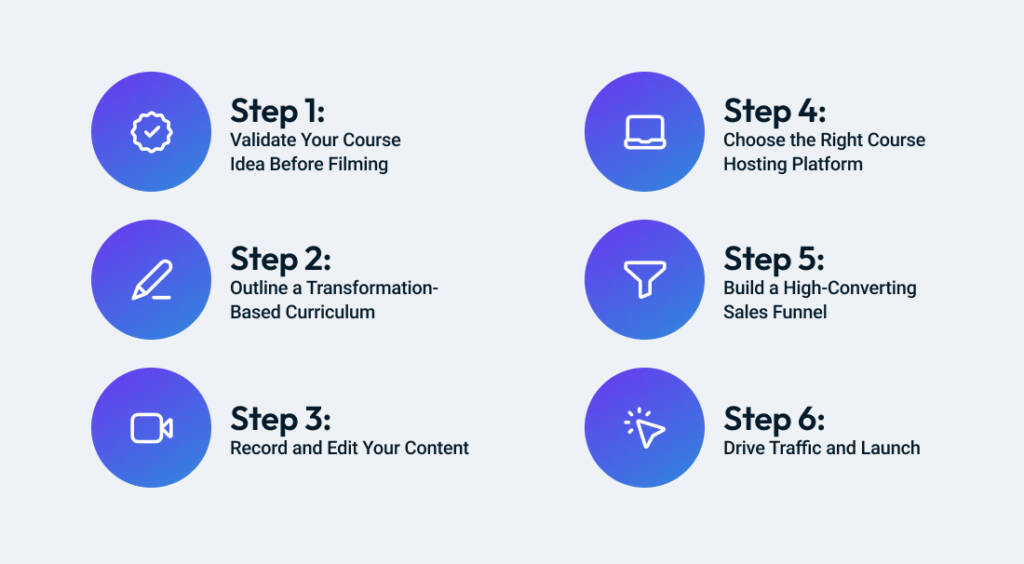
How to Create and Sell Your Course in 6 Steps

Infographic showing 6 steps to create and sell your online course.

Step 1: Validate Your Course Idea Before Filming

The most expensive mistake course creators make is spending three months filming a course that no one wants to buy. Before you write a single script, validate your idea. Run a “beta cohort” or a presale. Pitch the concept to your email list or social media following at a discounted rate. If people pull out their credit cards, your idea is validated. If they don’t, pivot your topic before wasting your time.

Step 2: Outline a Transformation-Based Curriculum

People do not buy courses because they want more information; they buy courses because they want a specific transformation. Outline your curriculum by starting with the end goal. If your course teaches people how to run Facebook ads, what exactly should they be able to achieve by module six? Break that journey down into bite-sized, logical milestones.

Step 3: Record and Edit Your Content

Do not let “production value” become a bottleneck. You do not need a professional studio to create a high-converting online course. Modern smartphones shoot in 4K, and a simple $30 ring light paired with a $50 lavalier microphone will provide excellent quality. Focus heavily on clear audio—students will forgive a slightly grainy video, but they will immediately refund a course if they cannot hear you clearly.

Step 4: Choose the Right Course Hosting Platform

Once your videos are rendered, they need a secure home. You need a platform that protects your intellectual property (preventing illegal downloads) while providing a seamless, branded learning experience for your students. Avoid platforms that take a massive percentage of your revenue; instead, look for software that gives you full control over your pricing and customer data.

Step 5: Build a High-Converting Sales Funnel

A great course will not sell itself. You need an automated sales funnel. A standard, highly effective course funnel looks like this:

  • The Lead Magnet: Offer a free checklist or mini-training in exchange for an email address.
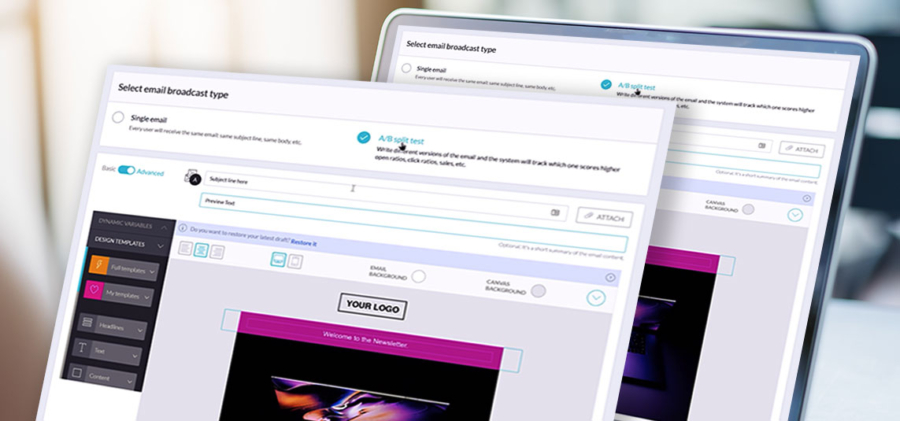
  • The Nurture Sequence: Send automated emails that build trust, share case studies, and introduce your paid course.
  • The Sales Page: Drive your email subscribers to a dedicated landing page that highlights the benefits of your course, includes testimonials, and features a secure checkout form.

Step 6: Drive Traffic and Launch

With your funnel in place, shift your focus entirely to traffic generation. Leverage short-form video on YouTube and Instagram to attract top-of-funnel awareness. Additionally, consider setting up an affiliate program so other creators can promote your course in exchange for a commission.

The Tech Stack You Need to Sell Online Courses

When you transition from creating a course to selling it, the technology requirements multiply. You suddenly need video hosting, a landing page builder, a checkout cart, and an email marketing platform.

Woman using a laptop at home, looking at screen with dashboard user interface.

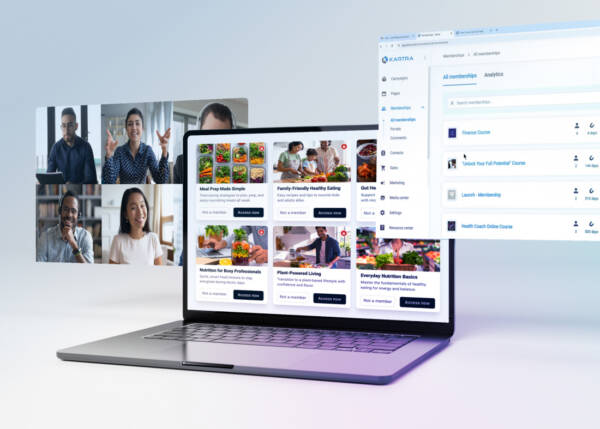
Instead of trying to duct-tape five different software subscriptions together—which leads to broken integrations and high monthly fees—use an all-in-one platform like Kartra.

Kartra is designed specifically for digital product creators. Within a single dashboard, you can:

  • Host your video modules in a beautifully designed, password-protected membership portal.
  • Build high-converting sales pages using drag-and-drop templates.
  • Process payments securely and offer flexible payment plans or subscriptions.
  • Automate your entire email follow-up sequence to convert leads into students on autopilot.

By consolidating your online course creation tools into one platform, you protect your profit margins and eliminate technical headaches.