

You can only fit so many hours into a week.
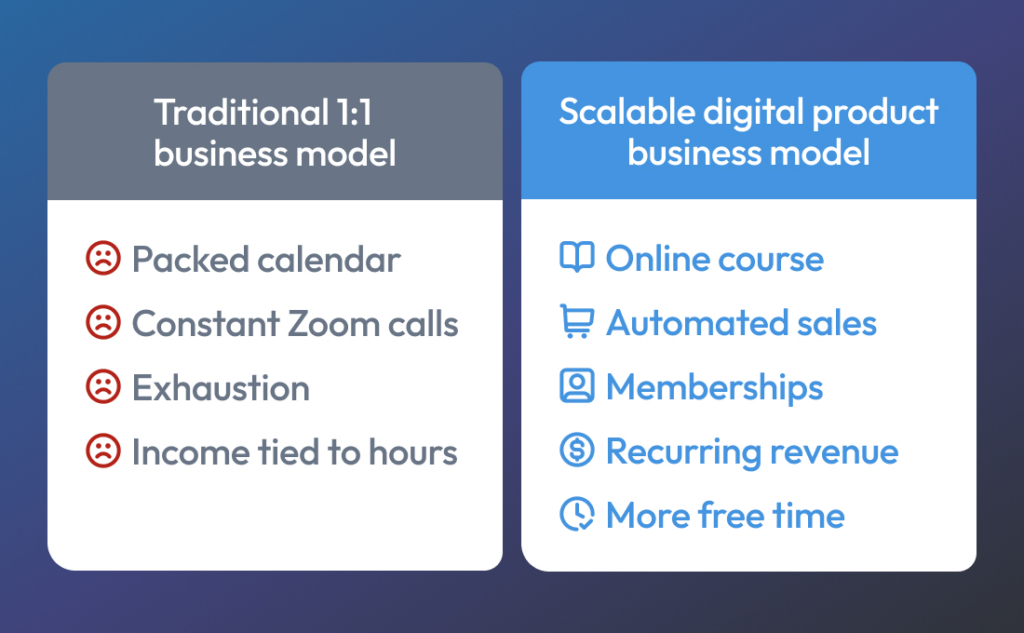
At some point, most coaches, consultants, and service providers hit the same wall. Their calendar is full. Clients still need them constantly. And even though the business looks successful from the outside, it starts feeling exhausting behind the scenes.
That’s where digital products come in.
Digital products help you turn your expertise into scalable assets that can generate income without requiring more live hours from you.

Instead of repeating the same advice, frameworks, or processes over and over, you package what you know into something people can access online.
The best part is you don’t need to become an influencer or a full-time content creator to make it work.
You just need a clear offer, a simple system, and a way to deliver real transformation online.
In this guide, you’ll learn:
- What digital products are
- Why they’ve become so popular
- The 20 most popular digital products experts are selling today
- How to choose the right one for your business
- Common mistakes to avoid when getting started
If you’ve been quietly thinking, “There has to be a better way to do this,” you’re probably in the right place.
What Are Digital Products?
Digital products are products people can access online instead of receiving physically.
That includes things like:
- Online courses
- Membership sites
- Workshops
- Templates
- Ebooks
- Coaching programs
- Digital downloads
Unlike physical products, digital products don’t require shipping, inventory, or manufacturing. Once they’re created, they can often be sold repeatedly without rebuilding them from scratch every time.
That’s one reason so many online businesses are built around digital products today.
For experts, they create a way to scale your knowledge without scaling your hours.
A nutritionist might turn a client onboarding process into a downloadable meal planning toolkit.
A therapist could create an online course about stress management.
A financial consultant might launch a membership site with monthly planning resources.
Instead of delivering everything live, you’re building systems that continue helping people over time.
Why Digital Products Are So Popular Right Now
More people are searching for flexible income streams, recurring revenue, and scalable online business models than ever before.
But this shift isn’t only happening because of trends.
It’s happening because traditional service businesses can become difficult to sustain long term.
Many experts eventually realize they’ve built businesses that completely depend on them being present every day.
Digital products create another option.
They allow you to:
- Reach more people
- Create recurring income
- Reduce dependency on one-on-one work
- Build a business with more flexibility
- Deliver transformation at scale

They also fit naturally into the creator economy, where people increasingly pay for specialized knowledge, guidance, and expertise online.
And for experienced professionals, that’s important.
You don’t need to invent something trendy.
You already have years of knowledge people are willing to pay for.
Are Digital Products Worth It for Coaches, Consultants, and Experts?
For many experts, digital products become the bridge between burnout and sustainability.
That doesn’t mean they’re completely passive.
You still need systems, content, and customer support.
But digital products can dramatically reduce the pressure of trading time for money every single day.
The Biggest Benefits of Selling Digital Products
One of the biggest advantages is scalability.
A coach can only take so many private clients.
But an online course or digital download can be sold repeatedly without adding more appointments to the calendar.
Digital products can also help create:
- Recurring revenue
- More predictable income
- Greater schedule flexibility
- Easier lead generation
- Stronger authority online
- Better customer experiences through automation
There’s also an emotional benefit many people don’t talk about enough.
You stop feeling like your business completely owns your time.
Instead of constantly reacting, you begin building systems that support your life more intentionally.
Common Myths That Stop People From Starting
A lot of experts assume digital products only work if:
- You have a huge audience
- You’re highly technical
- You post content constantly
- You already know advanced marketing
- You’re naturally good on camera
Most of that simply isn’t true.
Many successful digital product businesses started with:
- Small email lists
- Simple offers
- Basic sales funnels
- One focused problem
- Existing client knowledge
Another common fear is saturation.
People think, “There are already too many courses online.”
But people rarely buy information alone.
They buy clarity, structure, guidance, and transformation.
Your experience matters.
Especially in industries where trust is important.
When Digital Products Make the Most Sense
Digital products usually make sense when:
- You repeat the same advice often
- Your calendar is always full
- You want to scale without adding more clients
- People regularly ask for resources or recordings
- You’re starting to feel burned out from constant delivery
Those are often signs your expertise is ready to become a scalable offer.
And importantly, you don’t need a giant ecosystem to begin.
You can start with one simple product and build from there.
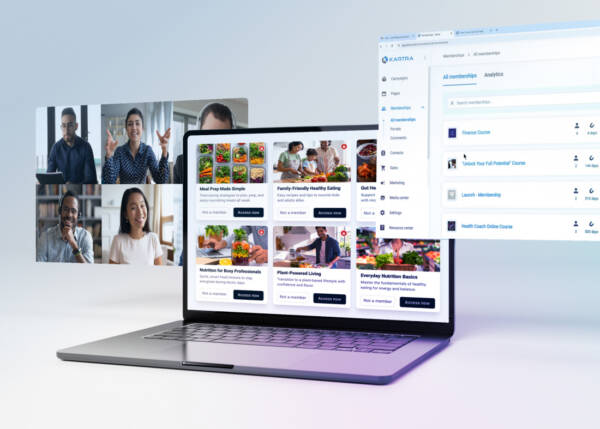
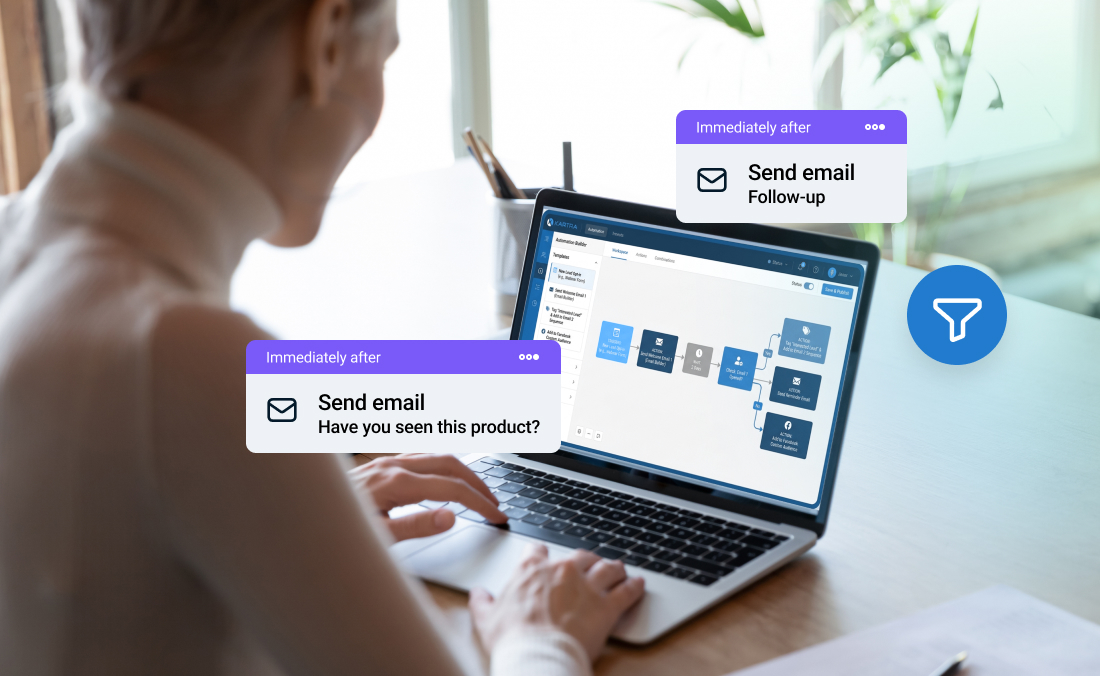
If you’re trying to simplify the process, platforms like Kartra can help you create landing pages, email automation, checkout pages, and membership delivery in one place instead of juggling disconnected tools.
The 20 Most Popular Digital Products to Sell Online
Not every digital product fits every business.
Some are better for beginners. Others work best once you already have an audience or proven framework.
The key is choosing something aligned with your expertise, energy, and goals.

1. Online Courses
Online courses are one of the most popular digital products because they package expertise into a structured learning experience.
They work especially well for:
- Coaches
- Consultants
- Educators
- Wellness professionals
Example:
A leadership consultant creates a six-week communication course for new managers.
2. Membership Sites
Membership sites provide recurring revenue through ongoing content, resources, or community access.
This model works well when people need continued support or accountability.
Example:
A fitness coach offers monthly workout plans, live Q&As, and nutrition resources through a subscription membership site.
3. Coaching Programs
Coaching programs combine guidance with scalable systems.
Instead of only offering private sessions, many experts shift into:
- Group coaching
- Hybrid coaching
- Cohort programs
This creates more leverage while maintaining personalization.
4. Digital Templates
Templates save people time.
That’s why they’re popular across nearly every industry.
Examples include:
- Checklists
- Intake forms
- Planning systems
- SOPs
- Canva templates
A wedding planner, for example, could sell event planning templates for newly engaged couples.
5. Ebooks
Ebooks are often one of the easiest digital products to create.
They work well for:
- Lead generation
- Low-ticket offers
- Authority building
A therapist could create an ebook about managing anxiety during major life transitions.
6. Paid Newsletters
Paid newsletters deliver curated expertise on a recurring basis.
This works especially well for:
- Analysts
- Researchers
- Advisors
- Industry experts
Subscribers pay for ongoing insight and perspective.
7. Webinars
Webinars remain one of the most effective ways to educate and sell online.
They can be:
- Live
- Automated
- Evergreen
A business consultant might host a webinar teaching operational systems for growing teams.
With tools like WebinarJam and Kartra, webinars can also connect directly into your email marketing and sales funnel automation.
8. Workshops
Workshops focus on solving one specific problem quickly.
They’re shorter and more action-oriented than full online courses.
Examples include:
- Stress reduction workshops
- Financial planning workshops
- Parenting workshops
- Goal-setting workshops
9. Downloadable Toolkits
Toolkits bundle multiple resources together.
That might include:
- Worksheets
- Frameworks
- Templates
- Guides
- Swipe files
These products often appeal to busy professionals who want fast implementation.
10. Private Communities
Some people don’t only want information.
They want connection and accountability.
Private communities create value through:
- Networking
- Peer support
- Group learning
- Shared progress
11. Audio Programs
Audio programs are ideal for busy audiences who prefer learning on the go.
Examples include:
- Guided meditations
- Leadership audio trainings
- Mindset coaching
- Relationship coaching programs
12. Printables and Planners
Printable digital downloads are especially popular in:
- Wellness
- Productivity
- Education
- Personal development
Examples:
- Habit trackers
- Meal planners
- Goal journals
- Budget planners
13. Certification Programs
Certification programs position experts at a premium level.
They work well for professionals teaching methodologies or frameworks others can apply professionally.
A wellness practitioner might certify coaches in a specific healing process.
14. Mini Courses
Mini courses focus on one narrow transformation.
They’re often easier to launch than large flagship programs and can work well as entry-level offers.
15. Digital Downloads
Digital downloads are simple products customers can access immediately after purchase.
Examples include:
- Guides
- Worksheets
- PDFs
- Resource libraries
These are often beginner-friendly products for creators entering the digital business space.
16. Subscription Content Libraries
This model gives subscribers ongoing access to a growing library of resources.
A yoga instructor, for example, could create a subscription library of mobility classes and recovery sessions.
17. Swipe Files and Scripts
People love frameworks that simplify execution.
Swipe files and scripts can include:
- Client communication templates
- Presentation scripts
- Interview frameworks
- AI prompts
- Assessment templates
18. Masterclasses
Masterclasses are premium deep dives into one specialized topic.
They often position the creator as a high-level authority.
Examples include:
- Public speaking masterclasses
- Executive leadership training
- Financial strategy intensives
19. Challenges
Challenges create engagement through short-term guided action.
Popular examples include:
- 5-day wellness challenges
- Productivity challenges
- Mindset reset challenges
- Decluttering challenges
Challenges also work well as audience-building tools.
20. Hybrid Digital Product Ecosystems
Many mature online businesses eventually combine multiple digital products together.
That might include:
- An online course
- A membership site
- Automated webinars
- Coaching programs
- Digital downloads
- Email automation
This creates a more stable ecosystem instead of relying on a single offer.
And importantly, it creates more leverage without requiring constant live delivery.
How to Choose the Right Digital Product for Your Business
The best digital product isn’t necessarily the trendiest one.
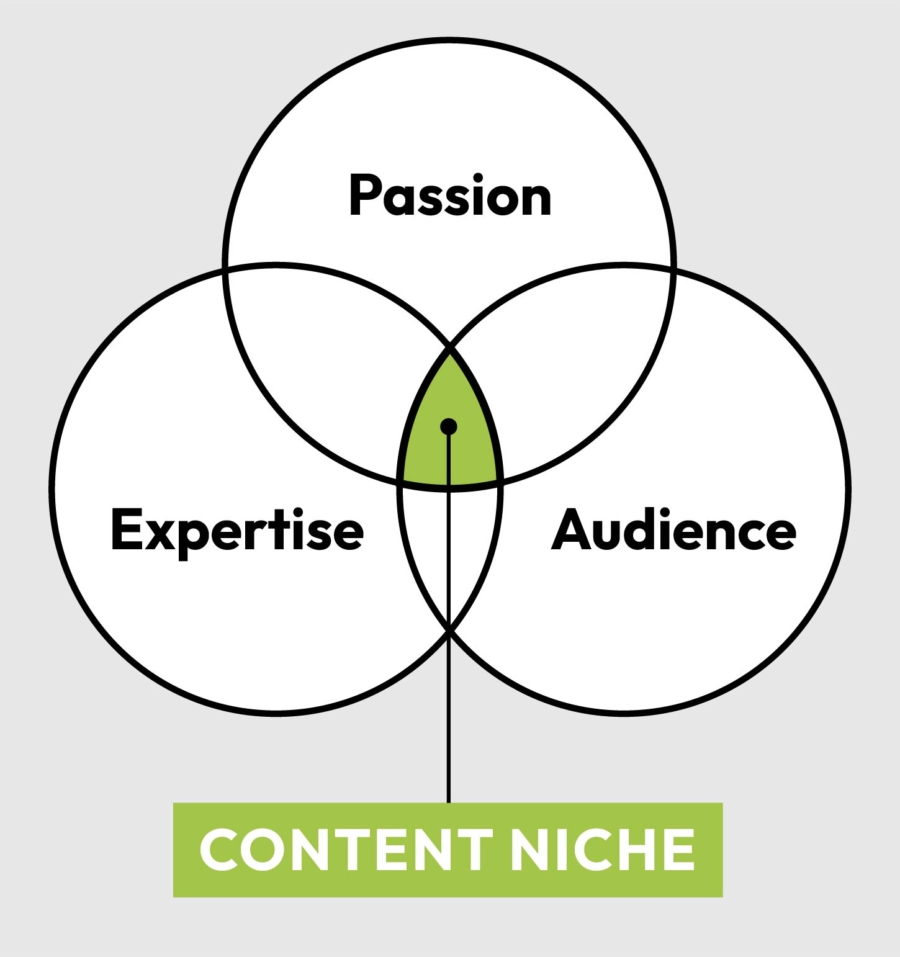
It’s the one that fits your expertise, audience, and lifestyle goals.
Start With What People Already Ask You For
Many experts overthink product ideas.
But your audience often tells you exactly what they need.
Pay attention to:
- Frequently asked questions
- Repeated client problems
- Common processes
- Resources people keep requesting
Those patterns usually point toward strong digital product opportunities.
Match the Product to Your Lifestyle Goals
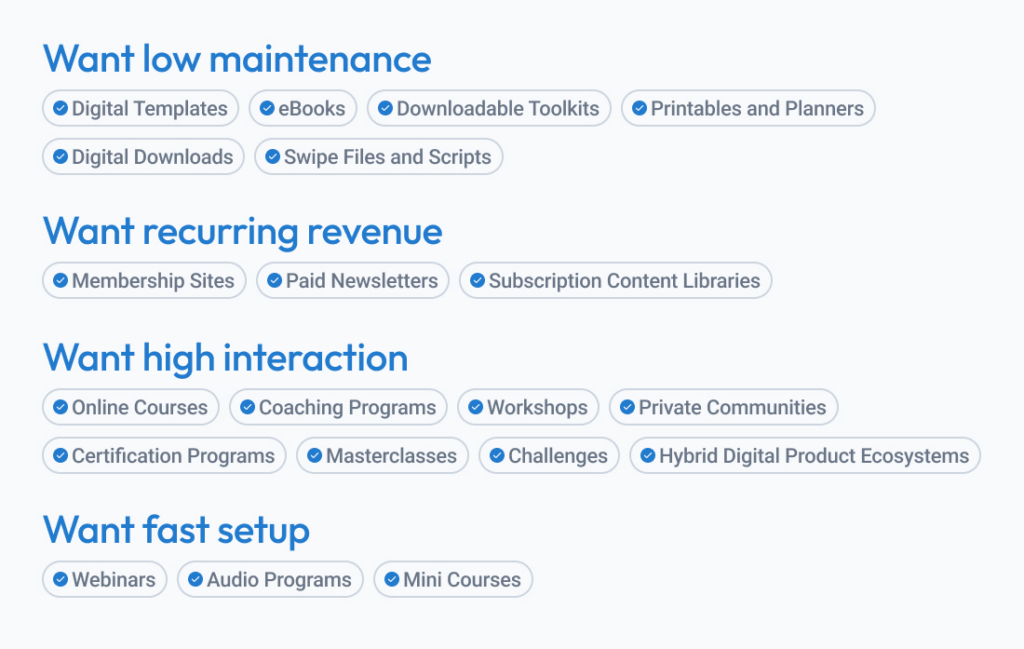
Different products require different levels of involvement.
For example:
- Membership sites often require ongoing engagement
- Digital downloads can be more low maintenance
- Group coaching requires live interaction
- Evergreen courses create more flexibility
Choose a business model that supports the life you actually want.
Not just the one that looks impressive online.
Start Simple Instead of Building Everything at Once
One of the biggest mistakes beginners make is trying to launch:
- A course
- A podcast
- A membership
- A webinar funnel
- A content machine
All at the same time.
That usually creates overwhelm fast.
Instead, start with:
- One audience
- One problem
- One offer
- One simple sales funnel

Momentum matters more than complexity.
Mistakes to Avoid When Creating Digital Products
Overcomplicating the Tech Stack
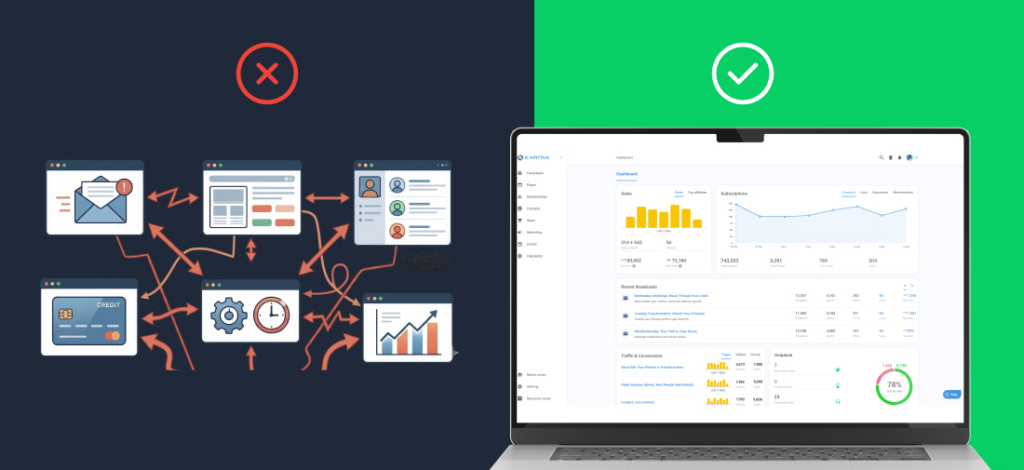
Too many online businesses rely on disconnected systems.
One tool for email marketing.
Another for checkout pages.
Another for memberships.
Another for automation.
Eventually, managing the technology becomes a full-time job.
That’s why all-in-one platforms have become increasingly popular for creators and experts who want simplicity.

Creating Before Validating Demand
Many people spend months building products nobody actually asked for.
A better approach is validating demand first.
That might include:
- Polling your audience
- Hosting a workshop
- Testing a webinar
- Pre-selling a course
- Offering a beta version
Validation reduces risk and improves product-market fit.
Trying to Copy Influencers Instead of Leveraging Expertise
A lot of experts assume they need to mimic influencer-style content to succeed online.
But expertise-based businesses work differently.
You don’t need viral dances or constant lifestyle content.
You need:
- Credibility
- Clarity
- Trust
- Real transformation
Your experience is already valuable.
The goal is learning how to package it effectively online.
Building Too Much Too Soon
It’s easy to believe you need a massive digital ecosystem immediately.
But complexity often slows growth.
Simple systems are easier to:
- Launch
- Maintain
- Improve
- Scale
That’s one reason many experts eventually move toward platforms like Kartra that combine email marketing, sales funnels, automation, landing pages, and membership delivery together.
Less fragmentation often means less overwhelm.
What You Actually Need to Start Selling Digital Products
You do not need dozens of complicated tools to begin.
Most digital product businesses only need a few core components.
Core Tools Every Digital Product Business Needs
At minimum, most online businesses need:
- Landing pages
- Email marketing
- Checkout functionality
- Content delivery
- Basic automation
- Analytics
Those systems help turn traffic into leads, customers, and repeat buyers.
Why All-in-One Platforms Are Becoming More Popular
Many experts are exhausted by disconnected tools.
When systems don’t communicate well, simple tasks become frustrating.
That’s why many creators now prefer all-in-one platforms that centralize:
- Email automation
- Sales funnels
- Membership sites
- Checkout pages
- CRM tools
- Analytics
Simpler systems often make businesses easier to scale sustainably.
A Simple Beginner-Friendly Digital Product Setup
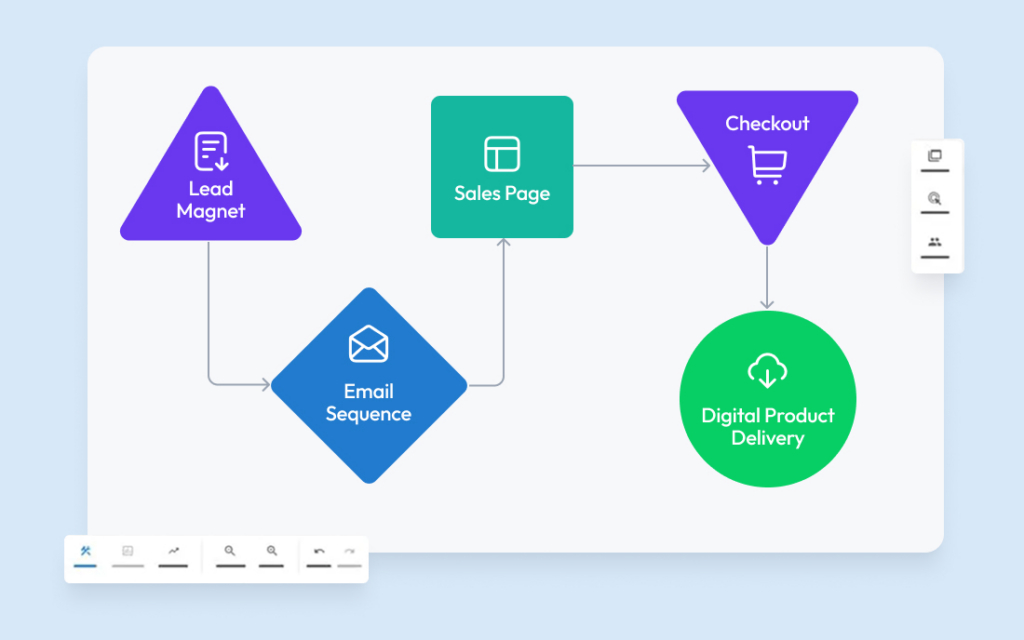
Your first digital product funnel does not need to be complicated.
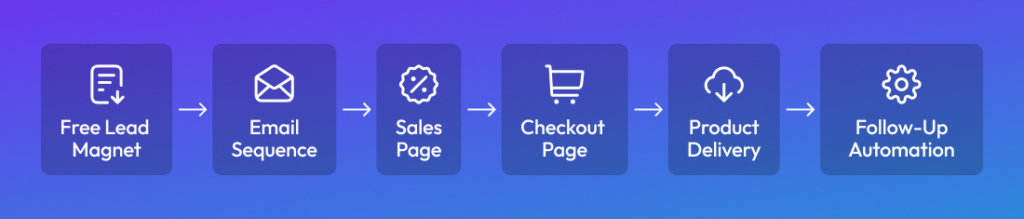
A simple setup might look like this:

- Free lead magnet
- Email sequence
- Sales page
- Checkout page
- Product delivery
- Follow-up automation
That alone can become a strong foundation for a scalable online business.
The Future of Digital Products and Online Business
The demand for expertise-driven businesses is continuing to grow.
And in many ways, AI is accelerating that trend.
People can access endless information online already.
What they still want is:
- Guidance
- Structure
- Context
- Accountability
- Human insight
That’s where experienced coaches, consultants, and experts have a major advantage.
Why Expertise-Based Businesses Are Growing
People trust experts who have real-world experience.
Especially in industries involving:
- Health
- Leadership
- Relationships
- Education
- Finance
- Personal development
Your experience becomes the differentiator.
Not your ability to chase trends constantly.
The Shift From Hustle to Leverage
Many business owners are reevaluating the nonstop hustle model.
They want:
- More flexibility
- More freedom
- More sustainability
- More meaningful work
Digital products support that shift by helping businesses rely more on systems and automation instead of constant live delivery.

That doesn’t only create scalable income.
It creates breathing room.
Final Thoughts: Start Smaller Than You Think
You do not need to build a massive online empire overnight.
You do not need perfect branding, advanced funnels, or complicated automation before starting.
Most successful digital product businesses begin much simpler than people expect.
One audience.
One transformation.
One offer.
That’s enough to begin creating momentum.
And if you’re already experienced in your field, you likely have more valuable knowledge than you realize.
The challenge usually is not expertise.
It’s packaging and delivering that expertise in a scalable way.
That’s where the right systems matter.